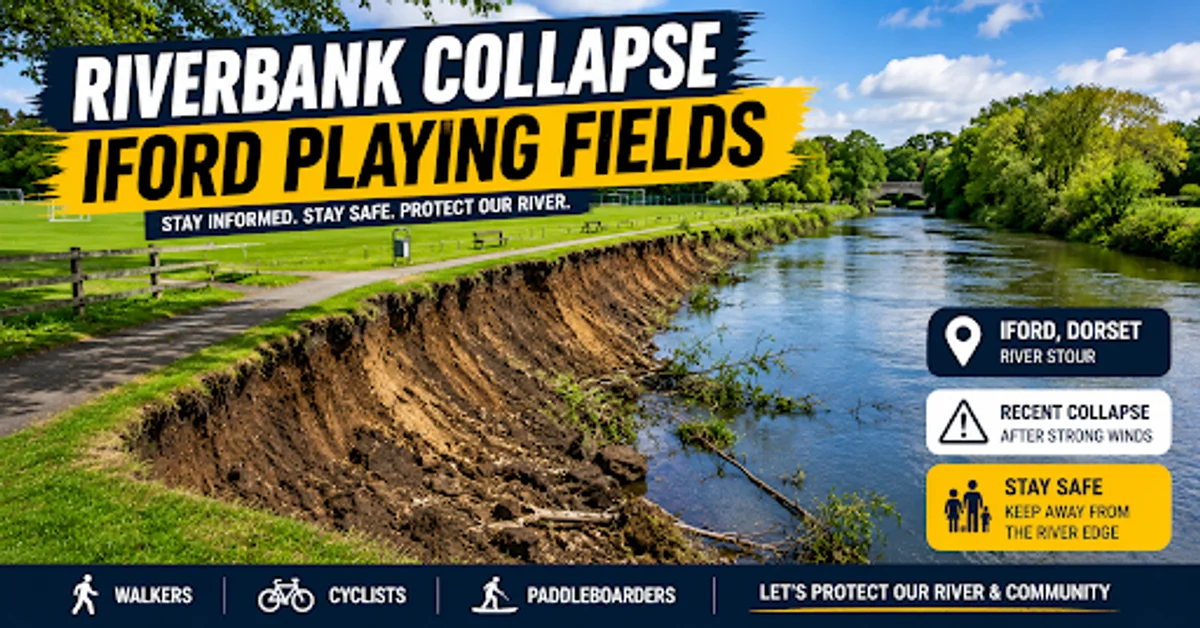
Riverbank Collapse Iford Playing Fields: A Clear Guide
Riverbank Collapse Iford Playing Fields incident drew attention because it happened in a place many people know well and enjoy every day. Iford Playing Fields, beside the River Stour, is popular for walking, cycling, paddleboarding, and quiet outdoor time. When a large section of the bank gave way, people naturally wanted answers. What happened? Why did it happen? And is the area still safe?
This article explains the event in a simple, trustworthy way. It uses the details shared about the collapse and places them in the wider context of river erosion, bank instability, and natural riverbank erosion. The goal is not to create alarm, but to give readers a clear picture of the situation, the likely causes, and the positive steps that can support riverbank safety River Stour in the future.
Where and When Did the Collapse Occur?
The collapse took place near Iford Playing Fields in Iford, close to Bournemouth and Christchurch in Dorset, England. This part of South West England includes riverside land shaped over time by water flow, soil movement, weather, and seasonal changes. In that kind of environment, river edge collapse can happen when the ground becomes unstable.
The photos shared by the witness were taken on May 29, and the damage had apparently occurred a couple of days earlier. That timeline matters because it suggests the collapse followed soon after the winds, rather than being a slow event that people had time to notice in advance. For readers looking up riverbank collapse Dorset or Christchurch riverbank collapse, this timing helps explain the local context.
Also Read: Veganovies com: The Ultimate Movie Snack Guide
Where Is Iford Playing Fields and Why Is It Important?
Iford Playing Fields sits beside the River Stour, a peaceful riverside setting that serves as both a recreation space and a natural landscape. People visit the area for exercise, fresh air, and water-based activities. It is one of those places where the beauty of the river and the value of open space come together. That makes any riverside erosion Iford event especially noticeable.
The site also matters because it is part of a wider network of river landscapes in Dorset. The River Stour erosion story is not only about one bank falling away. It is about how rivers shape land over time, how communities use those spaces, and how local authorities balance access with protection. That is why discussions about Iford riverside safety are important. A collapse here affects not just the bank, but the confidence people feel when using the path.
What Caused the Riverbank Collapse at Iford Playing Fields?
Strong winds likely played a part in triggering the collapse, especially if the soil was already weakened. Wind alone does not usually cause a bank to fail, but it can help expose instability when the ground is already under pressure. In the case of a riverside slope, wind can move branches, disturb root systems, and add stress to already fragile edges.
That does not mean the winds were the only cause. They likely acted as a final push in a longer process. Once the outer edge of a bank begins to weaken, the rest can follow rapidly. This is why people often see riverbank incidents as sudden even though the conditions were building over time. The bank collapse near Iford fits this pattern well.
Natural Riverbank Erosion Along the River Stour
BCP Council said erosion in this area is common and that the collapse was part of the river’s natural erosion process. That explanation reflects a basic truth about rivers: they constantly shape the land around them. Water movement, soil type, bank angle, and vegetation all affect whether a bank stays stable or begins to fail. In the long run, natural riverbank erosion is a normal geological process.
The River Stour bank failure near Iford is therefore best understood as part of a wider system. Over time, flowing water can undercut the bank, especially during wetter periods or when the river rises and falls. If the ground becomes soft, or if roots no longer hold it firmly, soil erosion and land slippage can follow. That is why experts often look at drainage conditions, tree root stability, and saturated ground when studying erosion near Iford Playing Fields.
Eyewitness Account from Nicky Adams
Nicky Adams provided a helpful human perspective on the event. She noticed the damage while walking her dogs and said she had not seen any warning signs beforehand. Her account adds realism to the story because it shows how ordinary people experience sudden environmental change. The collapse did not happen in a hidden or remote place; it happened in a public space used every day.
Her concern was not only about the appearance of the bank, but about public safety. She pointed out that the area is popular with walkers, cyclists, paddleboarders, and children who may play or swim there in summer. That concern makes sense. When a place has both beauty and easy access, even a small change in bank shape can become an important riverside hazard. Her observations helped turn the incident from a private surprise into a community issue.
BCP Council’s Response to the Riverbank Collapse
BCP Council said it was aware of the incident and explained that riverbank erosion is common in the area. The council described the collapse as unusually large, but still part of the natural behavior of the river. It also said it was monitoring the situation and seeking advice from partner organizations to decide on next steps. That is a measured and responsible local authority response.
This response matters because it shows the issue is being handled through environmental monitoring rather than panic. In situations like this, councils often need to assess erosion risk, bank stability, and the possible need for erosion management or bank stabilization. The best approach is usually careful evaluation, not rushed intervention. That is especially true where rivers support wildlife, habitats, and public recreation all at once.
Why the Council’s Message Matters
The council’s statement helps readers understand that the collapse is not necessarily a sign of a sudden wider crisis. It is better understood as part of a long-running environmental process that now needs attention. That kind of communication can reduce fear while still keeping people informed.
It also supports trust. When a local authority acknowledges what happened, explains the likely context, and says it is seeking expert advice, people are more likely to feel reassured. For a story like Riverbank Collapse Iford Playing Fields, that balance of honesty and calm is especially important.
Safety Concerns for Walkers, Cyclists, and Paddleboarders
The collapse naturally raises questions about riverbank safety. When a bank gives way, the edge may remain unstable for some time. Even if the visible damage appears fixed, the ground beneath can stay weak. That is why visitors should treat the area with caution until the site has been properly assessed. A riverside path can look calm and still hide instability.
The concern is especially relevant for people using the area for walking trails, cycling routes, or paddleboarding. In a place like Iford, where the river and path are close together, the edge can become hazardous after a collapse. People should avoid standing too near the bank, especially where there is fresh soil movement, fallen trees, or signs of slope failure. Good awareness helps protect both visitors and the landscape.
What Visitors Should Watch For
After a collapse, warning signs can include cracked ground, leaning trees, soft soil, fresh mud, or small slips near the edge. These are often signs of ongoing instability rather than a one-time event. In many cases, the bank may still be changing even if the major collapse is over. That is why people should treat the area carefully and respect any local guidance.
This kind of awareness supports infrastructure safety and public confidence. It also helps reduce the chance of injury in places where outdoor recreation and natural erosion overlap. Visitors do not need to fear the river, but they do need to read it carefully. A healthy respect for the river’s power is part of safe riverside enjoyment.
Environmental Impact on the River Stour and Local Wildlife
A collapse like this can affect more than human access. It can also influence the ecological impact on the river system itself. When a bank falls in, soil can enter the water and change local flow patterns. Trees and roots may also fall or shift, altering shelter and shade for wildlife. In that sense, the event becomes part of a larger watercourse management picture.
At the same time, river systems naturally change. Erosion can create new habitats while removing others. That is why environmental experts often see bank movement through a balanced lens. The goal is not to eliminate all change, but to manage it wisely. In the River Stour, that may mean protecting sensitive areas while allowing the river to continue its natural path in other sections. This is where habitat conservation and environmental protection come together.
Why River Change Is Not Always Negative
It is easy to think of erosion only as damage, but rivers are dynamic systems. They shape floodplains, move sediment, and support biodiversity. Over time, these changes can create healthier river margins in some places, even while causing concern in others. That is why river specialists often look at the long view instead of reacting only to one collapse.
In the case of the Riverbank Collapse Iford Playing Fields, the event is best seen as both a challenge and a reminder. It shows the power of nature, but it also highlights the need for thoughtful management. Good river maintenance, careful erosion assessment, and respectful use of the riverside can help balance access and conservation in Dorset and beyond.
Can Future Riverbank Collapses Be Prevented?
No riverbank can be made completely collapse-proof, because rivers are always moving and changing. But risk can often be reduced through smart planning and steady observation. Erosion prevention may include planting deeper-rooted vegetation, improving drainage, reinforcing vulnerable sections, or limiting foot traffic near the edge. These steps do not stop nature, but they can support bank stabilization.
The most effective approach usually depends on the local conditions. In some places, engineering works may be useful. In others, the best solution is to let the river behave naturally while keeping people safely away from unstable sections. This is where river engineering and environmental judgment need to work together. The aim is practical: protect people, protect habitats, and keep the river corridor healthy.
What Makes Prevention Difficult
Prevention is difficult because the causes are layered. Heavy rainfall, seasonal flooding, soft ground, exposed roots, and changing water levels can all contribute to instability. Even when one factor is managed, another can still weaken the bank. That is why a one-size-fits-all answer rarely works for Dorset riverbank erosion.
At Iford, the challenge is to understand the site’s natural rhythm. If the area has always been prone to erosion, then the best plan may involve monitoring and selective protection rather than major construction. A thoughtful erosion management strategy can keep the area usable while preserving the river’s natural processes. That balanced approach is often the most sustainable one.
Also Read: Gelboodu: A Smart, Searchable Anime Imageboard Guide
Frequently Asked Questions
What happened at Iford Playing Fields?
A large section of the riverbank beside the River Stour collapsed after strong winds, creating a visible section of bank loss near Iford Playing Fields.
Was the collapse caused only by strong winds?
Not likely. Strong winds may have helped trigger the event, but the collapse appears to be part of broader natural riverbank erosion and bank instability.
Is Iford Playing Fields still safe to visit?
The area should be approached carefully until local authorities complete their checks. Visitors should stay away from the edge and follow any advice from BCP Council.
Why does riverbank erosion happen in this area?
Riverbank erosion happens because the river, soil, weather, and vegetation constantly interact. In some places, the bank becomes vulnerable to slope failure and land slippage.
What did BCP Council say about the collapse?
BCP Council said erosion in the area is common, described the collapse as unusually large, and said it was monitoring the site and seeking expert advice.
Can this happen again?
Yes, future river edge collapse is possible if conditions remain unstable. That is why ongoing monitoring and smart erosion management are important.
Summary
The Riverbank Collapse Iford Playing Fields event is a clear reminder that rivers are living landscapes. They move, reshape, and respond to weather in ways that can be both beautiful and powerful. In this case, a familiar riverside spot near Iford, Bournemouth, and Christchurch changed suddenly, raising understandable questions about safety and land stability.
The good news is that the response has been calm and practical. The incident has been acknowledged, monitored, and placed in the context of the river’s natural behavior. That is the right direction. With careful observation, sensible access, and a focus on riverbank safety River Stour, the area can remain a valued part of life in Dorset and South West England while respecting the force of nature that shaped it.
This article was created to inform readers clearly, avoid hype, and support trust with accurate context. It is based on the incident details provided and on well-established understanding of river processes, erosion, and public safety. In that spirit, the best takeaway is simple: stay aware, respect the river, and appreciate the balance between recreation and nature.